Identity & community Highly Kosher Professionals Q&A
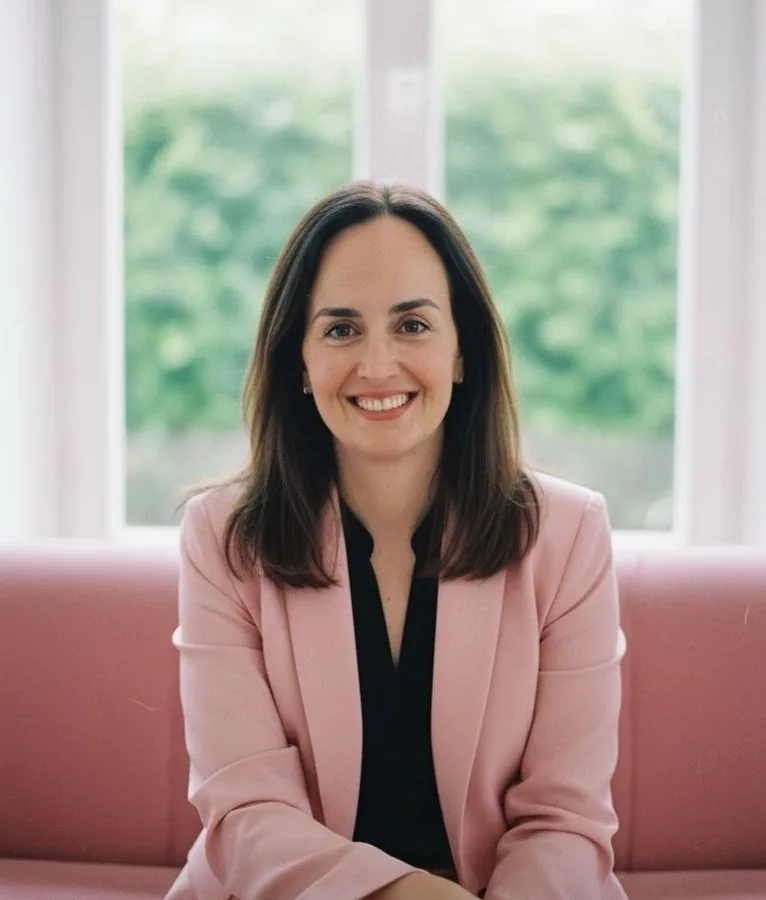
Adriana Kertzer
Adriana Kertzer is a New York-based Brazilian Texan Jewish activist, psychedelic lawyer, and cultural producer. She co-founded Plant Medicine Law Group, a law firm that specialized in psychedelic infrastructure, and the Jewish Healing Society, an organization committed to fostering a supportive environment for Jews in psychedelic medicine and science that was born out of her Instagram account, JewWhoTokes. Adriana also co-founded Jews in Weed and played a critical role in its formative years.
JIW What topics in Judaic Studies most interested you while studying at Brown University?
Adriana I graduated in 2002 with a double major in Judaic Studies (with a focus on feminist theory and Latin American Jewish Migration) and International Relations (with a focus on US-Brazil social, political and economic relations), and my favorite courses were the ones where those two worlds met. As a Brazilian Jew, I was a pig in mud in Prophets in the Tropics: Latin American Jewish Literature. I also loved the seminar Gendered Jewish Lives, which gave me language for how Jewish women's experiences get written in or out of the story. I also studied rabbinic literature, Israeli society, Zionism, and took three semesters of Hebrew. Looking back, the course that planted the deepest seed was Historiography of Kabbalah and Messianism. It introduced me to Jewish mystical traditions and to the ways Jews have longed for transformation and redemption, which are themes I return to constantly in my work at the intersection of Judaism and altered states.
JIW How did your studies at Brown strengthen your Jewish identity?
Adriana I grew up in a secular Zionist family in São Paulo with no synagogue affiliation. I went to a secular American school, spent summers at a Christian girls' camp in Texas, and never went to Hebrew school. During my gap year between high school and college, I had an antisemitic experience in Italy that made me realize how little I knew about my own heritage, and I arrived at Brown hungry to learn. Brown gave me the texts, the history, and the Hebrew, but it also gave me a community. I had my Bat Mitzvah at 19 as an undergraduate, and I've observed Shabbat since 2001 (I began when I was an intern at Goldman Sachs!). Studying Judaism academically and living it at the same time taught me that Jewish identity is both inherited and chosen, and I chose it fully.
JIW What were the most exciting parts of your roles with famous museums like The Guggenheim Museum and Museum of Arts and Design?
Adriana At the Guggenheim, I served as Acting Assistant General Counsel, and my highlight was working on the Tino Sehgal exhibition (2010). For the first time in the museum's history, the entire rotunda was cleared of art objects. In its place was This Progress, where interpreters ranging from children to octogenarians engaged each visitor in conversation, handing them off to progressively older guides as they spiraled up the ramp. Because the work involved children, I got to explore the child labor issues involved in having young interpreters as part of a live artwork. It was a fascinating legal puzzle and a reminder that behind every great exhibition is a lot of careful thinking about the people who make it possible.
At the Museum of Arts and Design, I was a Curatorial Assistant and Digital Strategist, working alongside Lowery Stokes Sims on New Territories: Laboratories for Design, Craft and Art in Latin America, the first U.S. museum group exhibition of contemporary Latin American design. It featured 77 creative practitioners from 10 cities and ran from November 4, 2014 to April 6, 2015. The show looked at collaborations between small manufacturers and craftspersons, artists, and designers, and how that work speaks to urbanization, displacement, and sustainability. It was especially meaningful to me because Lowery discovered some of the objects she chose for the exhibition in my book, Favelization: The Imaginary Brazil in Contemporary Film, Fashion, and Design. As a Brazilian, seeing work I had written about come to life in a New York museum was a dream. I also contributed to the exhibition catalogue and organized a mini conference so the dozens of designers who came for the exhibition had a chance to present their work, with a cachaça sponsor for the afterparty and Grupo Habita hosting us at their awesome hotel.
JIW When did you decide to open Plant Medicine Law Group and when did you see a necessity for it? What were some notable cases that you oversaw with that firm?
Adriana I co-founded Plant Medicine Law Group with my dear friend Hadas Alterman in 2020. We saw that the psychedelic industry was emerging, and the companies, nonprofits, practitioners, and researchers building it needed lawyers who actually understood the field. PMLG became the first law firm focused on psychedelic infrastructure and we grew it from a solo practice into a four person team before I sold the firm in 2024. The firm was also a launchpad for community work. That same year, I created Faith+Delics, an interfaith working group that spent a year bringing together Jews, Christians, and Muslims exploring the role of psychedelics in their communities (that was eventually the theme of a Harvard conference in 2025 in which my early work received no credit).
JIW What inspired you to create Jewish Healing Society? What are some useful ways that cannabis and psychedelics are discussed in that organization?
Adriana JHS grew out of JewWhoTokes, which I started on Instagram in 2016 to celebrate the intersection of Judaism, plant medicine, altered states, and spiritual growth. After October 7, it became a safe haven for Jews confronting antisemitism in the cannabis and psychedelic industries. We hosted 20 pre-Shabbat calls with Jordan Isenstadt, and I traveled to Israel in February 2024 to document how the harm reduction community responded to the Nova attack, which became "The Worst Trip Ever" in Tablet Magazine. In 2025, I gave the JewWhoTokes Instagram to Jordan so it could become Jews in Weed and I launched JHS to focus on psychedelics and mental health.
At JHS, the conversation centers on psychedelics, and it runs on two tracks. The first is healing with community: making sure Jews can learn about and access the benefits of psychedelics without fear or discrimination. That means sharing resources that reflect the full range of Jewish beliefs, levels of observance, languages, and cultural backgrounds, offering culturally relevant harm reduction information, and partnering with psychedelic service and retreat centers that welcome Jewish culture, language, religiosity, and diets. We also use psychedelics as a bridge, building connections between Jewish communities in the US and Israel that would otherwise have little or no contact with each other.
The second track is mutual aid for professionals. We educate and support Jewish and Israeli psychedelic and mental health professionals on everything from science and harm reduction to integration, always with an awareness of Jewish history, trauma, and antisemitism. We strengthen the bonds among Jewish practitioners, researchers, and industry leaders in Israel and the diaspora, help document antisemitism and discrimination when patients or professionals face it, and celebrate Jewish-led achievements in psychedelic medicine and science.
JIW What are some meaningful events you plan on hosting in the future with Jewish Healing Society?
Adriana On October 7, I moderated a conversation in Austin about the first clinical trial with ibogaine in Israel. It is a hospital-based phase 1 safety trial for severe, treatment-resistant PTSD, co-led by Hadassah Medical Center and Tel Aviv Sourasky Medical Center (Ichilov) in collaboration with MAPS Israel and Tel Aviv University. Lior Kritzman of MAPS Israel presented the trial, and I led a panel with Lior and Yoni Zairi of Israelis for Ibogaine, an organization I advise. Gaby Poler-Buzali organized the evening, and JP and Janet Newman hosted us at their offices. Israelis are carrying an enormous amount of trauma, and they deserve careful, well-run research into every treatment that might help.